

1839 Cherokee Meat Co: Reclaiming Food Sovereignty in Tahlequah
Key Takeaways
- 1839 Cherokee Meat Co is a tribally-owned facility in Tahlequah, OK, focused on food sovereignty.
- The name honors the 1839 Cherokee Constitution and the Act of Union.
- They process beef, pork, lamb, goat, and wild game with a focus on sustainability and respect.
- State-of-the-art dry aging and transparent labeling are standard practices.
- Pricing is structured to be affordable for local producers and families.
When you talk about sovereignty, most people think about courtrooms, treaties, and jurisdiction. But if you can’t feed your own people, those legal wins feel a lot less substantial. That is where 1839 Cherokee Meat Co comes in. Nestled in the heart of the Cherokee Nation in Tahlequah, Oklahoma, this isn’t just a place to get a steak. It is a brick-and-mortar manifestation of Cherokee self-determination.
For too long, the food supply chain has been controlled by a handful of massive corporations that don’t know your name and certainly don’t care about your heritage. 1839 Cherokee Meat Co flips the script. They aren’t just processing protein; they are processing independence. By providing a local, reliable, and culturally grounded meat processing facility, the Cherokee Nation is ensuring that what ends up on your dinner table was handled with trust, respect, and gratitude.
The Significance of 1839: More Than Just a Year
To understand the mission, you have to understand the name. The year 1839 is etched into the soul of the Cherokee people. On September 6, 1839, the Cherokee Constitution was enacted in Tahlequah. This was the legendary Act of Union. It was the moment when the Eastern Cherokees—those who had survived the genocidal forced removal known as the Trail of Tears—joined forces with the Western Cherokees, also known as the Old Settlers who had moved to Indian Territory years prior.
Imagine the tension, the grief, and the sheer grit required to form a single, unified government after such trauma. Tahlequah became the capital of this reunited nation. When you see “1839” on the sign of this meat processing plant, you are looking at a tribute to that resilience. It is a reminder that even when external forces try to tear a people apart, the drive to unite and sustain one another wins out. Today, that sustenance is literal.
Food Sovereignty: The Plate is a Battlefield
Food sovereignty is the right of a people to healthy and culturally appropriate food produced through ecologically sound and sustainable methods. It is also the right to define their own food and agriculture systems. For the Cherokee Nation, this means moving away from a reliance on external markets that are prone to price gouging and shortages.
1839 Cherokee Meat Co was made possible through tribal investment and federal grants, signaling a serious commitment to this cause. By controlling the processing, the Nation ensures that local farmers have a place to bring their livestock without waiting six months for a slot at a corporate-owned facility. It keeps the money in the community, the carbon footprint low, and the quality high. You aren’t just buying meat; you are participating in a closed-loop system of tribal empowerment.
The Bison Restoration: A Cultural Connection
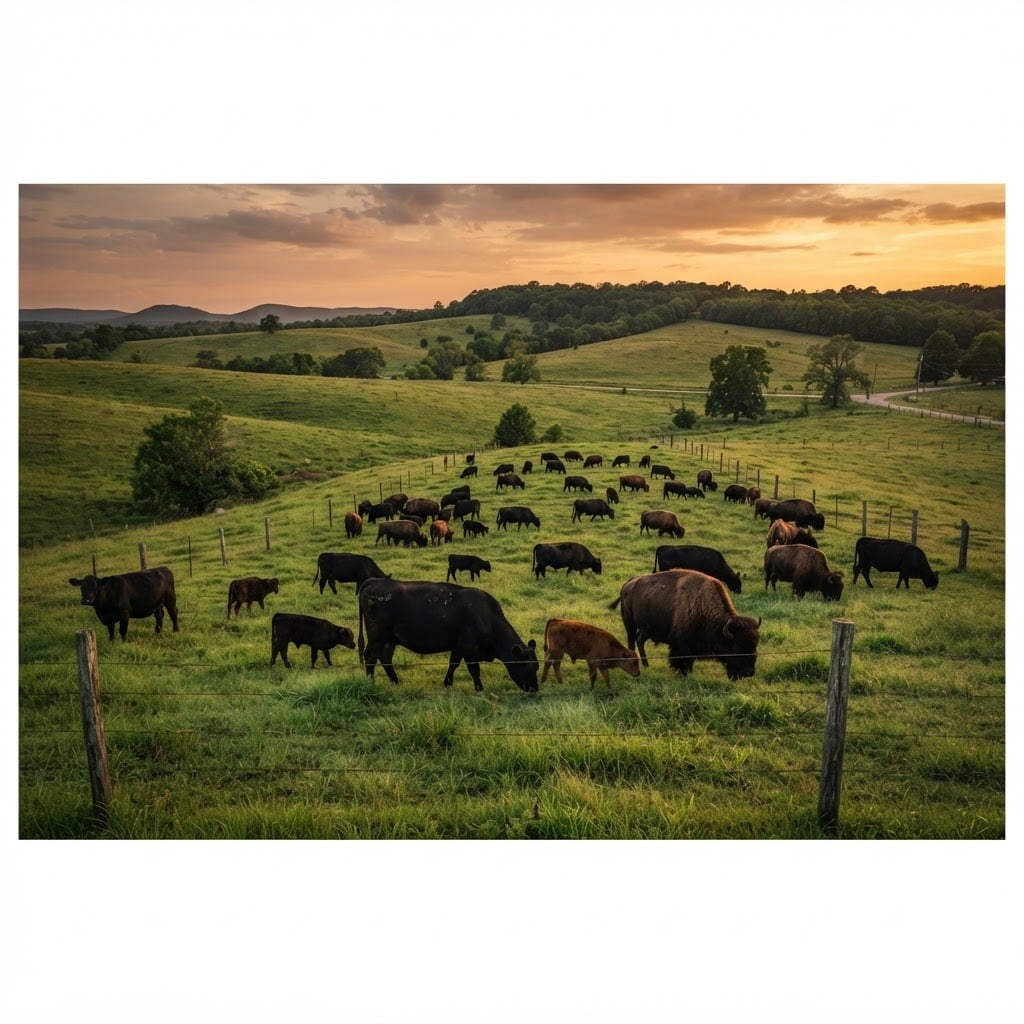
Perhaps nothing represents food sovereignty better than the bison. 1839 Cherokee Meat Co handles approximately 250 head of bison. These aren’t just livestock; they are relatives. The restoration of bison to Cherokee lands is a massive conservation victory and a spiritual homecoming. Bison were nearly wiped out by colonial expansion as a tactical move to starve Indigenous populations. Bringing them back—and processing them locally for the community—is the ultimate full-circle moment. When you consume bison from 1839, you are participating in a tradition that predates the very concept of a “supermarket.”
Services and Philosophy: Trust, Respect, Gratitude
The facility, located at 1819 N 466 Road in Tahlequah, operates with a philosophy that you won’t find at a commercial slaughterhouse. They treat every animal—whether it’s one of their 200 cattle or a local farmer’s goat—with a level of respect that acknowledges the animal’s sacrifice. The environment is clean, safe, and modern, but the values are ancient.
One of the standouts of their operation is the dry aging process. While industrial plants rush meat out the door to maximize volume, 1839 Cherokee Meat Co understands that time equals flavor and tenderness. They also prioritize transparency. Your labels are clear, and your tags are tracked. If you want the organs, they are cut on the day of slaughter to ensure maximum freshness and nutritional value. They handle beef, pork, lamb, goat, and deer (wild game), though you should always check their seasonal availability.
The 2024 Deer Season Note
Attention hunters: For the 2024 season, 1839 Cherokee Meat Co has announced that deer processing is unavailable due to capacity limits. As the facility grows and adapts to the high demand of the community, these adjustments happen. Always check their official Facebook page or call ahead before you plan your season around a drop-off.
How to Get Your Meat Processed: A Practical Guide
If you are a producer or a hunter looking to utilize this facility, you need to know the drill. This isn’t a “show up whenever” kind of place; it’s a professional operation that requires coordination to maintain its high safety standards.
- Drop-off Times: You can drop off your livestock between 2:00 PM and 4:00 PM the day before your scheduled processing date, or by 9:00 AM on the day of processing.
- Location: 1819 N 466 Road, Tahlequah, OK 74464.
- Hours: Monday through Friday, 9:30 AM to 5:00 PM.
- Online Orders: While they are currently working on an e-commerce platform, the best way to stay updated on retail availability is through their social media.
By following these protocols, you help the staff maintain a workflow that keeps prices down and quality up for everyone in the Cherokee Nation.
Pricing Breakdown: Transparency in Every Pound
One of the pillars of food sovereignty is affordability. If the local food is too expensive for the local people, it isn’t sovereign; it’s boutique. 1839 Cherokee Meat Co keeps their pricing transparent and competitive. Here is how the costs break down for custom processing:
| Livestock Type | Harvest Fee | Processing Rate | Inspected Rate | Minimum Charge |
|---|---|---|---|---|
| Beef | $100.00 | $0.80 / lb | $0.90 / lb | $400.00 |
| Pork | $40.00 | $0.75 / lb | $0.90 / lb (Smoke & Cure) | $100.00 |
| Lamb | $40.00 | $0.75 / lb | $0.85 / lb | $100.00 |
| Goat | $40.00 | $0.75 / lb | $0.85 / lb | $100.00 |
| Deer (Wild Game) | $125.00 (Base) | Varies by add-ons | N/A | N/A |
Note: Pricing is subject to change. The “Inspected Rate” applies to meat intended for resale, ensuring it meets all regulatory safety standards. The “Minimum Charge” ensures the facility can cover the operational costs of smaller batches.
FAQ: Frequently Asked Questions
What does “1839” stand for in the company name?
The name honors the 1839 Cherokee Constitution, which unified the Cherokee Nation in Tahlequah following the Trail of Tears. It represents a history of resilience and political sovereignty.
Do I have to be a Cherokee Nation citizen to use their services?
While the facility is owned by the Cherokee Nation and focused on tribal food sovereignty, they serve the broader community in and around Tahlequah. You should contact them directly for specific scheduling availability.
What makes their processing “sustainable”?
Sustainability at 1839 means reducing the distance food travels from farm to table, using humane handling practices that reduce animal stress (which also improves meat quality), and providing transparent labeling so you know exactly what you are eating.
Can I buy meat directly from them without bringing in an animal?
Yes, 1839 Cherokee Meat Co has a retail component. They offer high-quality cuts of beef and bison. Online ordering is “coming soon,” but you can visit their Tahlequah location during business hours to see what is in stock.
Why is deer processing closed for the 2024 season?
Capacity limits are the primary reason. To maintain the high quality of their custom beef and bison processing, they occasionally have to limit wild game intake. Check back for the 2025 season updates.
Supporting the Mission
Supporting 1839 Cherokee Meat Co is about more than just filling your freezer. It is about voting with your dollar for a future where tribal nations are self-sufficient. When you choose a local, tribally-operated processor over a multi-national conglomerate, you are putting power back into the hands of the people who live on and care for the land.
Keep an eye on their Facebook page (facebook.com/1839CherokeeMeatCo) for updates on retail specials, new services, and the launch of their online store. Whether you are a farmer looking for a respectful processor or a family looking for the best bison in Oklahoma, 1839 is the standard-bearer for the new Cherokee food economy.
Last reviewed: July 2026
Osiyo.net is an independently operated information platform. Always verify directly with the specific Tribal Nation or business.